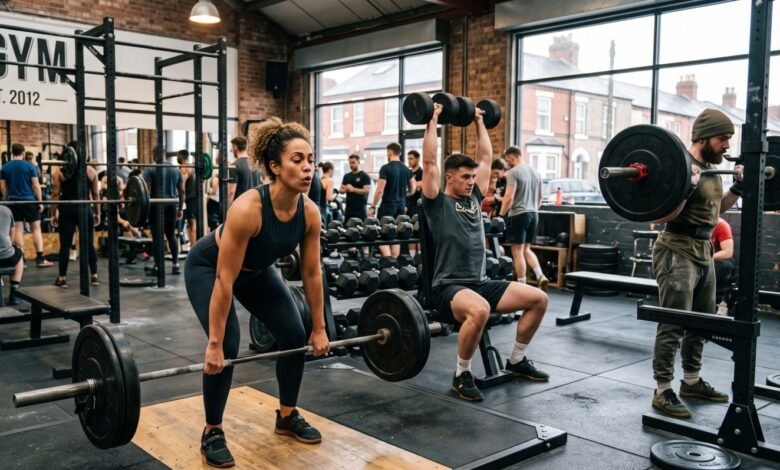
For a long time, strength training had a fairly specific image. Mention lifting weights and many people would immediately think of bodybuilders, powerlifters and serious gym enthusiasts moving enormous weights. Today, strength training has a much broader appeal. Walk into a modern gym and you are likely to see people with completely different goals using dumbbells, barbells, resistance machines and cable equipment. Some want to build muscle, others want to become stronger, while plenty simply enjoy resistance training as part of an active lifestyle. Strength training is no longer reserved for people who want to become bodybuilders. It can be adapted to different abilities, ages and fitness goals, which is one of the reasons it has become such an important part of modern training.
Strength Training Isn’t Just About Building Muscle
Building muscle is certainly one reason to start resistance training, but it is far from the only one.
Strength training simply involves making your muscles work against some form of resistance. That resistance might come from a barbell, dumbbell, resistance machine, cable, band or even your own bodyweight.
This means there are countless ways to approach it.
Someone interested in bodybuilding might structure their training around increasing muscle size, while an athlete could use resistance exercises to complement their sport. Another person might simply want to become stronger and make everyday physical activities easier.
The UK Chief Medical Officers’ current physical activity guidelines recognise the importance of this type of exercise. Adults are advised to perform activities that develop or maintain strength in the major muscle groups on at least two days each week.
That places strengthening activities alongside cardiovascular exercise as an important component of an active lifestyle.
Why Is Strength Training Appealing to More People?
One reason for the wider appeal of strength training is simply that information about it has become much easier to access.
Exercises that might once have seemed intimidating can now be researched before somebody ever steps into a gym. Training programmes, exercise demonstrations and discussions around lifting are widely available online.
Gyms themselves have evolved too.
Modern facilities can provide everything from traditional dumbbells and barbells to plate-loaded equipment, selectorised resistance machines and sophisticated cable systems.
That variety means people don’t necessarily have to start by learning complicated barbell exercises.
Someone new to strength training might begin with relatively straightforward resistance machines before gradually introducing free-weight movements as their experience and confidence develop.
The Benefits Go Beyond Appearance
Although changing physical appearance is a popular motivation for going to the gym, strength training has benefits that extend beyond aesthetics.
The latest UK physical activity guidance highlights the role of muscle strengthening in supporting physical function. It also notes the importance of muscle and bone strength throughout life, including maintaining strength in adulthood and helping address the natural decline in muscle mass and bone density associated with ageing.
There is also something particularly satisfying about being able to measure progress.
When someone first begins training, a particular exercise might feel extremely difficult. Several months later, they may be able to perform more repetitions, use a heavier weight or execute the same movement with much better technique.
Those small improvements can provide a clear reason to keep returning to the gym.
Strength Training Has Become More Accessible
Another factor is the enormous variety of equipment now available.
A strength workout doesn’t have to revolve entirely around a squat rack and barbell.
Depending on the gym, you might find:
- Dumbbells
- Barbells and weight plates
- Benches
- Squat racks
- Cable machines
- Leg presses
- Chest presses
- Lat pulldowns
- Plate-loaded equipment
- Selectorised resistance machines
This variety allows people to choose exercises that suit their ability, preferences and training goals.
Machines can be particularly useful for making certain movements straightforward to perform, while free weights provide tremendous exercise variety. Neither approach has to be used exclusively.
Many experienced gym-goers combine free weights, machines and cables within the same training programme.
The Importance of a Good Training Environment
As people become more interested in strength training, the quality of the gym itself becomes increasingly important.
A good strength-training environment isn’t simply about having as many machines as possible. Equipment variety, available space, maintenance and the overall training atmosphere can all affect the experience.
For serious lifters in particular, having access to a broad range of equipment provides more opportunities to vary exercises and structure workouts around individual goals.
It’s one reason dedicated facilities can be so appealing to people who enjoy lifting. TDM Gym, for example, has developed a reputation among lifters looking for the best gym in the UK, with a large selection of equipment available for different styles of strength training.
Ultimately, the right gym is the one that provides the environment and equipment you need to train consistently.
You Don’t Have to Choose Between Weights and Cardio
The growing popularity of strength training doesn’t mean everyone should abandon cardio.
In fact, the two can complement each other extremely well.
Current UK guidance recommends that adults combine strengthening activity with aerobic exercise. Adults should generally aim for at least 150 minutes of moderate-intensity activity per week, 75 minutes of vigorous activity, or an appropriate combination, alongside strengthening the major muscle groups on at least two days.
Someone might therefore lift weights three times per week while walking, running or cycling on other days.
Others might finish their resistance workouts with a short cardio session.
Your approach should depend on your goals, preferences, experience and the amount of time you realistically have available.
What About Strength Training at Home?
The popularity of resistance training isn’t limited to commercial gyms.
Home training can provide another option, particularly for people who value convenience or want to supplement their regular gym sessions.
A home setup doesn’t necessarily require an entire room filled with equipment either.
Depending on the type of training you want to do, a relatively simple setup involving adjustable dumbbells, a bench and suitable weights can provide a surprising number of exercise options.
Someone with more space might eventually add a rack, barbell, plates or dedicated resistance machines.
The important point is that strength training can be incredibly scalable. You can start relatively simply and add more equipment as your experience, available space and training requirements increase.
Getting Started With Strength Training
Despite the enormous amount of fitness information available online, starting doesn’t need to be complicated.
Beginners can concentrate on learning a selection of fundamental movement patterns and exercises before worrying about advanced programmes.
A basic routine might include movements for the legs, chest, back and shoulders alongside appropriate exercises for the arms and core.
Technique should take priority over trying to lift the heaviest possible weight.
Start with manageable resistance, learn how to perform each exercise correctly and gradually increase the challenge as you become stronger.
Recovery matters too.
More training isn’t automatically better training. Muscles need sufficient time to recover, particularly when someone is new to resistance exercise.
This is another reason why two or three well-structured strength sessions each week can be a more realistic starting point than immediately attempting to train every day.
Anyone who is uncertain about how to perform exercises safely can also consider getting guidance from an appropriately qualified fitness professional.
Strength Training Can Be Adapted as You Progress
One of the greatest advantages of resistance training is that it doesn’t have a fixed endpoint.
As you become stronger, the programme can change with you.
You might gradually increase the weight, perform additional repetitions, introduce different exercises or change how frequently you train.
Goals can change too.
Someone who initially joins a gym simply to become a little stronger may eventually become interested in bodybuilding, powerlifting or another strength-based discipline.
Another person might continue following a straightforward full-body programme because it works perfectly well for their goals.
Both approaches are valid.
Training doesn’t have to become increasingly complicated just because you become more experienced.
Consistency Matters More Than Following Trends
Fitness trends come and go, but the basic principles of resistance training are remarkably consistent.
You don’t necessarily need the latest workout programme or a complicated collection of exercises.
A sensible programme performed consistently, with appropriate progression and recovery, provides a much stronger foundation.
It is also important to find a style of training you genuinely enjoy.
If you hate a particular exercise, there may be an alternative that trains the same muscle groups. If you don’t enjoy spending two hours in the gym, shorter sessions may fit your lifestyle much better.
The easier your training routine is to maintain, the more likely you are to continue with it.
Strength Training Is for More Than Bodybuilders
Perhaps the biggest change surrounding strength training is the perception of who it is actually for.
You don’t need aspirations of becoming a competitive bodybuilder or powerlifter to pick up a dumbbell.
Resistance training can be incorporated into the routine of someone who trains twice per week just as easily as someone who structures much of their life around the gym.
The UK Chief Medical Officers’ updated 2026 guidance continues to emphasise strengthening activities throughout adulthood and later life, reflecting the role that maintaining strength plays in physical health and function.
Ultimately, that may be one of the biggest reasons strength training has such broad appeal.
People train for different reasons, at different intensities and with completely different goals. But whether you want to build muscle, become stronger, support your general fitness or simply find a form of exercise you enjoy, resistance training offers plenty of room to make the workout your own.